Sculptor
Costa Vece
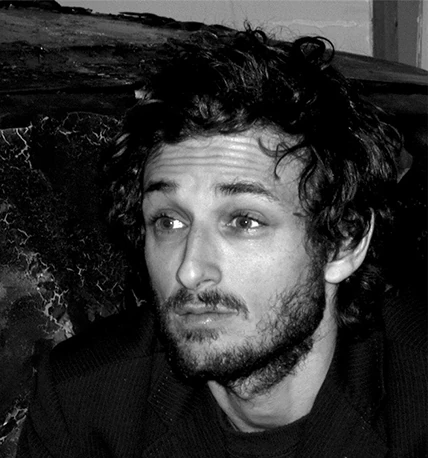
Costa Vece, born in Switzerland in 1969 as the son of Italian-Greek parents, became well known at the latest with this participation at the Venice Biennale in 1999. His works present questions on the possibility of homeland and cultural identity, attest to social exclusion and existential homelessness. With simple, found materials and everyday objects, he builds inaccessible and barricaded sites that in part exclude the exhibition visitors and passersby, or give them that feeling. Like provisional camps, these structures insert themselves into the space and show with their wall murals and slogans, flags and barbed wire a resistant image.
Telling for Costa Vece’s installations are their high degree of intensity, an almost indirect engagement with existential emotional questions, and a corresponding refraction in their aesthetic. In his installations, he projects film sequences that leave a mark due to their intensity. He shows us worlds full of intimacy, memory, and longing, but the social utopias suffer in his work shipwreck. Costa Vece develops apocalyptic visions of political violence and shows us the rejecting facades of political mise-en-scene.
In recent years his have been on view at Migros Museum, Zürich (2001), Kunsthalle Schirn, Frankfurt (2004), Museion, Bozen (2007) and Kunsthaus Zürich (2008).
flags
«Flags»
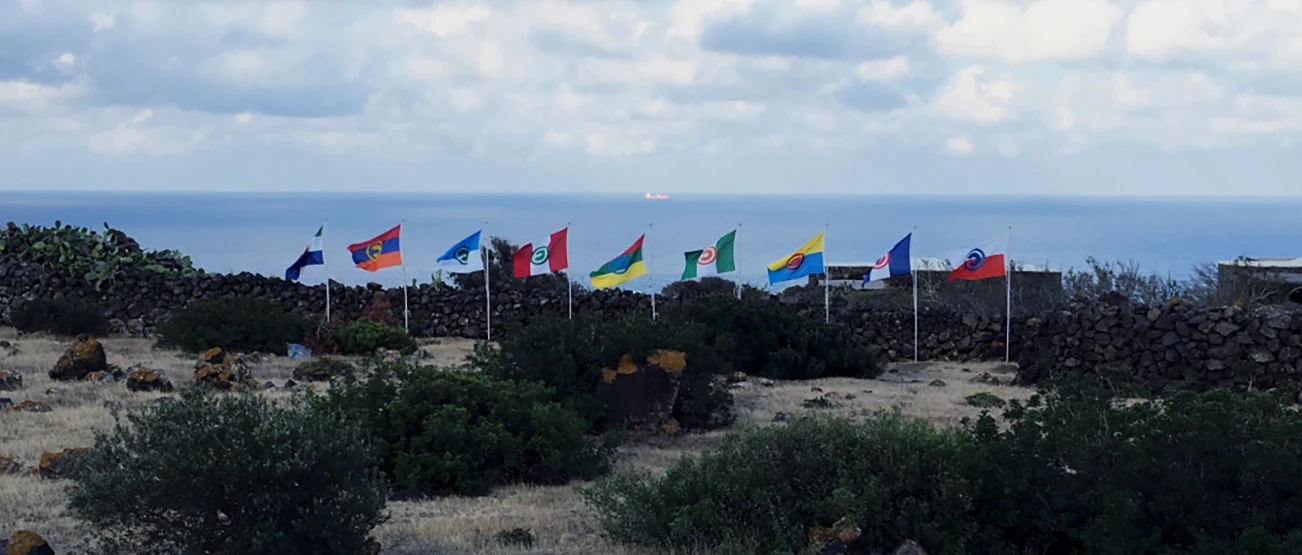
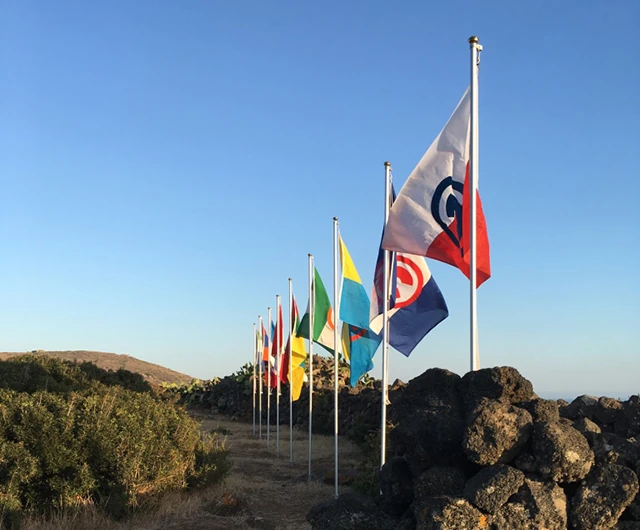
The national flags for Costa Vece symbolically represent people from non-European countries who make up the throngs of immigrants, asylum seekers and ‘illegals’ who so often have to fritter away their lives in exploitative conditions of production and service and who can only operate in the grey areas on the margins of society, wanted neither here nor there. The used socks, T-shirts, jeans and jackets that the flags are cobbled together from point to their distant places of origin, which are often the same as the addresses on aid deliveries. Conflict zones in places such as Kashmir, Darfur, Kukuma, Bangladesh, Thailand or the favelas of Brazil are often no more than a stone’s throw from cheap-labour production plants. The circulation of goods comes full circle and feeds into the re-use of items in the construction of a work of art.
The flags embodie both a hope and a curse. It has little scope for intimacy. It is imbued with human beings’ ability to leave nothing undone that might help to restore a person’s dignity. The curse is that those intentions which were originally intended as temporary solutions have now become a permanent state for so many, and will continue to be so.
Details
Technique:
Tecnica mista
Year:
2000
From the Author:
Installazione ambientale
Location:
Mikado
logo inverted
Sito Ufficiale de La Collina di Loredana
Associazione culturale e artistica e Museo a cielo aperto
Chiunque voglia partecipare puo' chiedere di aderire
liberamente, condividendo i nostri sogni e i nostri ideali
info@lacollinadiloredana.it
Via Cimillia, 30
91017 Pantelleria, (TP) Italy
+39 379 197 7473
+39 366 38 03 217
8:00 AM - 17:30 PM
Lunedi - Sabato